Strength training and conditioning are important parts of athletic development. Exercise application, prescription, lifting progressions, frequency, and intensity are investigated, studied and integrated into programs to enhance performance and augment the chances of success. Coaches address nutrition and many upper level institutions hire sports nutritionists that address pre and post exercise dietary regimes.

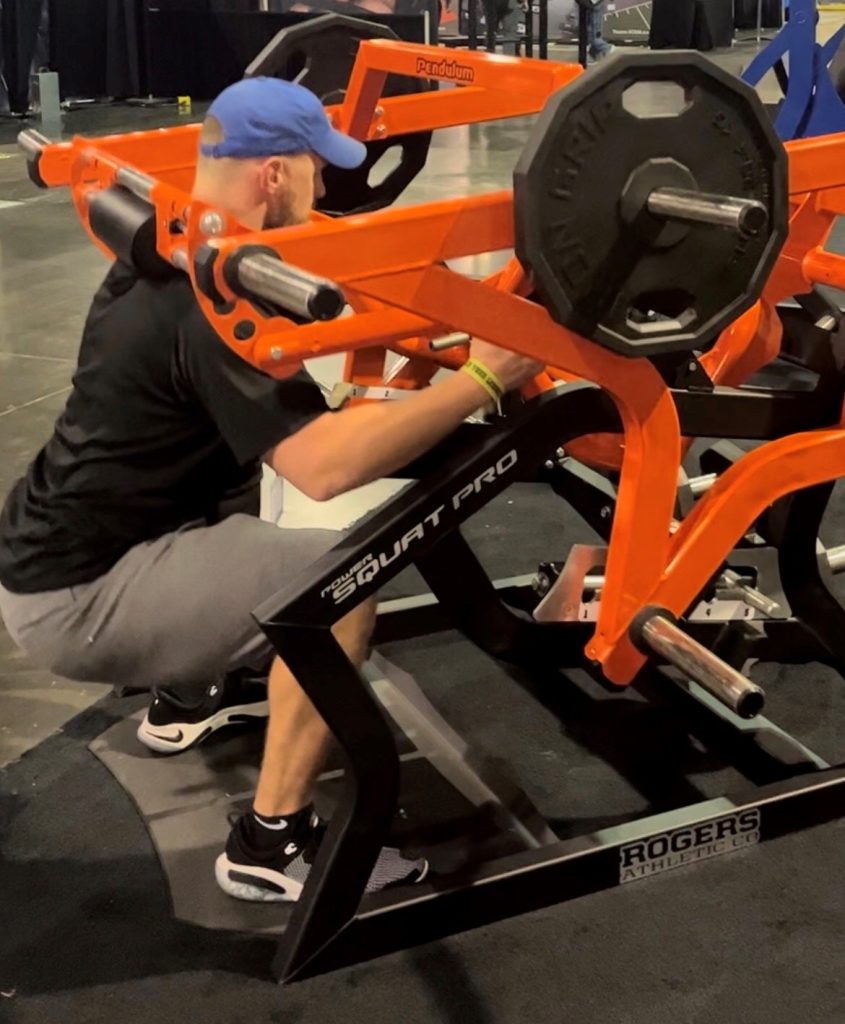
Pendulum Belt Squat
The most difficult for the coach, as well as the athlete, to control that negatively affects physical strength, endurance, cognitive function, and injury risk is adequate sleep.
Sleep is affected by studying, exams, bright lights, roommates, friends, dating, family, traveling, meetings, classes, practice, anxiety, stress, competition, competition results, caffeine, alcohol, diets, overtraining, electronic device usage, injuries, medical issues and even in some instances increased body mass. It is recommended that quality sleep of well over 8 hours is necessary and in addition taking naps during the day of 20 to 90 minutes is highly beneficial.
What can we do as coaches? The number one avenue is, education of the athlete. Monitoring and utilizing sleep questionnaires and encouragement of self reporting, teaching usage of sleep sensor technology, instructions of exercise recovery strategies, sleeping in dark quiet bedrooms, limiting electronic device usage, winding-down strategies and coaching the importance of recovery are all important aspects of guidance.

When sleep becomes as important to the athlete as practice, competition, strength training, conditioning and diet; it becomes a tremendous aid in physical development, cognitive function, enhances sports-specific skills, positively affects reaction time, accuracy, restores performance baseline, increases endurance, enhances psychological resilience, reduces injuries, and optimizes performance.
“Nothing is better than a good night’s sleep.”