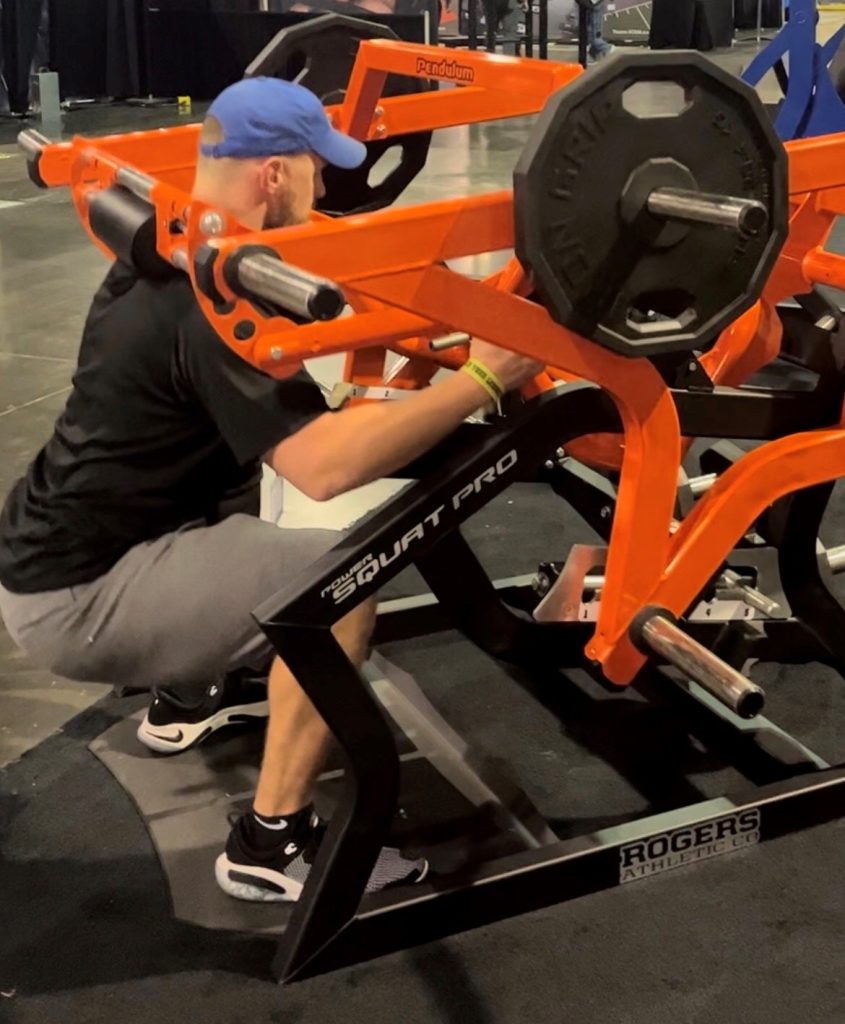
The rectus femoris is a powerful hip flexor, largely dependent on the position of the knee and is strongest when the knee is flexed, losing power as the knee extends. Most leg presses get heavier as the weight is lowered making it difficult for the hip flexors to unload in the bottom position, this is problematic as it is necessary for the lifter to engage the hip extensors and glutes in the lowest part of the repetition. The Pendulum Hip Press was designed to solve this training issue by addressing how the musculature functions in this complex anatomical area.
In development of the hips, not only is it important to be able to initiate movement when the femur is in deep flexion, but as a coach you will find the majority of athletes have deficits in range of motion in this region. Range of motion improves during Hip Press workouts simply by placing the feet in a normal comfortable position on the footpad and when lowering the weight bringing the knees naturally back and letting them rotate slightly outside the shoulders into a stretched position. After several weeks upon initiating a Pendulum Hip Press program, as strength improves, flexibility will increase and in most cases the seat height will need to be moved one setting forward to address the positive change in flexibility.

Jen Defoy two-time State of Michigan Golden Gloves Champion
Training on the Pendulum Hip Press