In strength training latissimus dorsi exercises are advocated to provide muscle balance to upper body pressing movements. Having strong lats allow for generating force and are important in lifting and accelerating heavy or light weights.
In most sports injuries to this area are comparatively rare, yet can be debilitating. Latissimus injuries more often are seen in sports such as baseball from shoulder throwing movements, gymnastics, volleyball, tennis, rock climbing and wrestling.
Increasing the strength at specific joint positions aids not only in development, but as importantly in rehabilitation. Mechanical advantages aid in fiber recruitment, increase metabolic stress and provide a greater neuromuscular fatigue.

In the seated row supination and pronation of the hands affect and target specific areas of one’s musculature whether it be; rhomboids, middle trapezius, teres major, posterior deltoid, long head of the tricep, biceps, forearms or other stabilizing muscles.
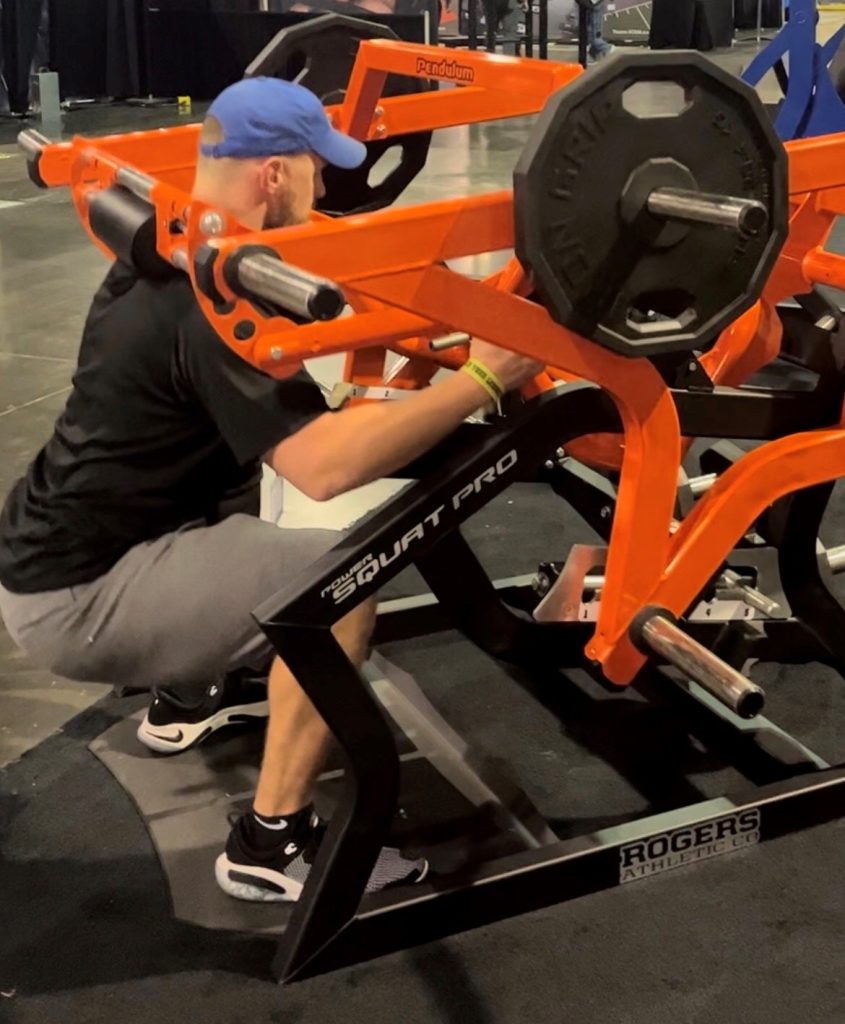
The Pendulum 3-Way Row has three separate handle positions specifically designed to single out these powerful latissimus dorsi muscles and its stabilizers. This enables the athlete to be strong in all joint positions when the movement is a lower mechanical advantage or not.
A great way to Get Strong.

Training on the Pendulum 3-Way Row