Performing the barbell squat using different techniques and methodologies requires an understanding of the impact of muscle activity and joint loading. Changing bar positioning, stance width, foot angle, trunk position, depth and other factors alters how the movements affect our physiology.
Recently in 2024 the International Journal of Sport Physical Therapy published, A Biomechanical Review of the Squat Exercise: Implications for Clinical Practice. The article is a must read for athletes, coaches and trainers as it addresses the biomechanical differences between squatting variations according to the kinematic and kinetic profile that best match one’s training goals.
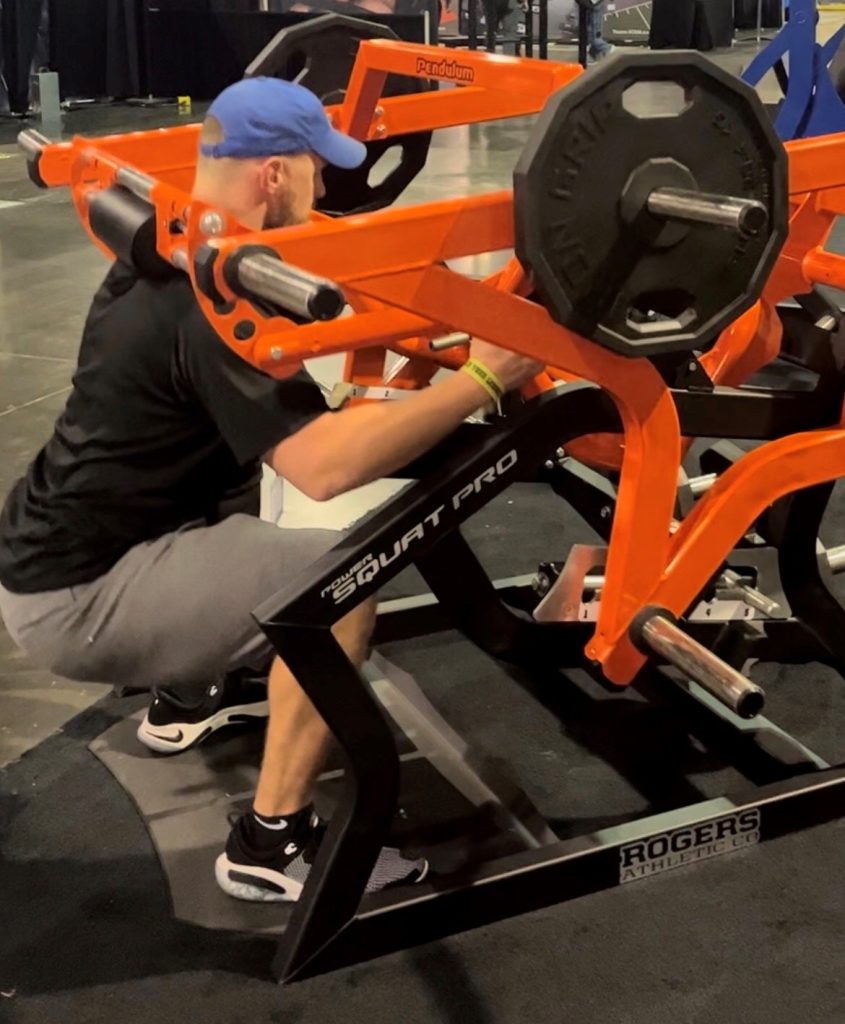
Addressing human factors in engineering is an important concept that colleges and universities teach and companies utilize in product development. The Pendulum Power Squat Pro was designed to eliminate the necessity for bodily adjustment to maximize the strengthening contributions of barbell squatting.
The vast majority when experiencing the Squat Pro for the first time are surprised how it feels and quickly understand what one is trying to accomplish with the physical adjustments needed before performing the exercise when placing a barbell upon their shoulders.

Pendulum Power Squat Pro
For athletes who are interested in development of the ‘posterior chain’ when squatting Rogers Athletic engineers reconfigured the Power Squat Pro to become a second training device – the Pendulum Squat Pro XT. This machine is designed to target the specific areas of the thoracic, lumbar and hip extensor musculature, enhancing posterior back chain kinematics.
Understanding the impact of muscle activity and joint loading will aid in selecting the apparatus, which best fits your athletes musculoskeletal needs. Pendulum has great choices for getting the most out of movement and Getting individuals Strong.

Training on the Pendulum Power Squat Pro XT