The shoulder has the greatest range of motion of any joint in the body, it’s mobility can also lead to shoulder joint problems. The bony process on the very end of medial part of the shoulder blade or scapula spine is called the acromion, it can be thought of as the roof of the shoulder. The acromion meets and articulates with the collar bone and forms the acromioclavicular joint. The separation between the inferior side of the acromion and the head of the humerus of the upper arm is called the subacromian space and is a little less than one half inch in what is deemed the normal population.
When performing repetitive tasks and fatigue begins to set in, the athlete adapts by re-positioning his or her joints to maintain performance and maintain the important subacromial space width. Space width is synonymous with shoulder function and safety. The anterior and posterior deltoids, latissimus dorsi and other upper body muscles, when their strength is reduced causes scapula reorientation. Scapula reorientation keeps or increases the width of the joint space, which allows proper alignment of the shoulder socket during movement.
The shoulder is a complex joint and is affected by much of the musculature of the upper torso – understanding how fatigue causes adaptive functional anatomical changes….make sure when you train that you neglect nothing….. “Everything…affects everything”, so Get everything Strong!

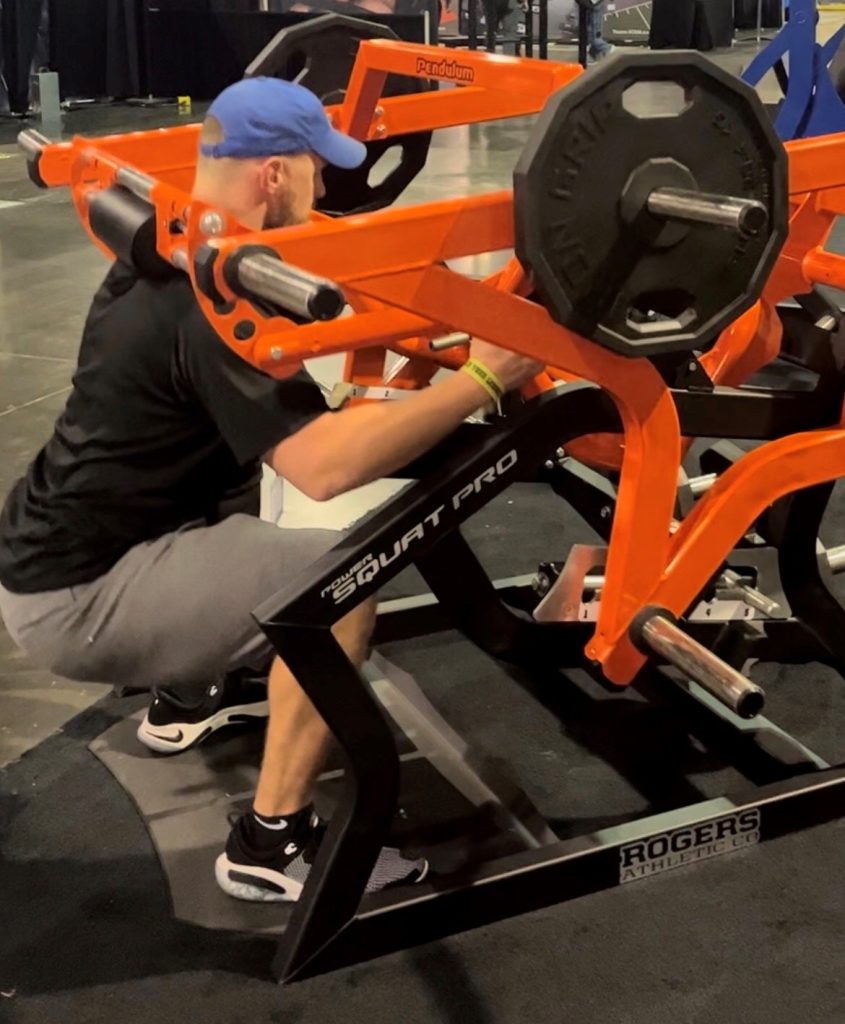
Training on the Pendulum Shoulder/Incline