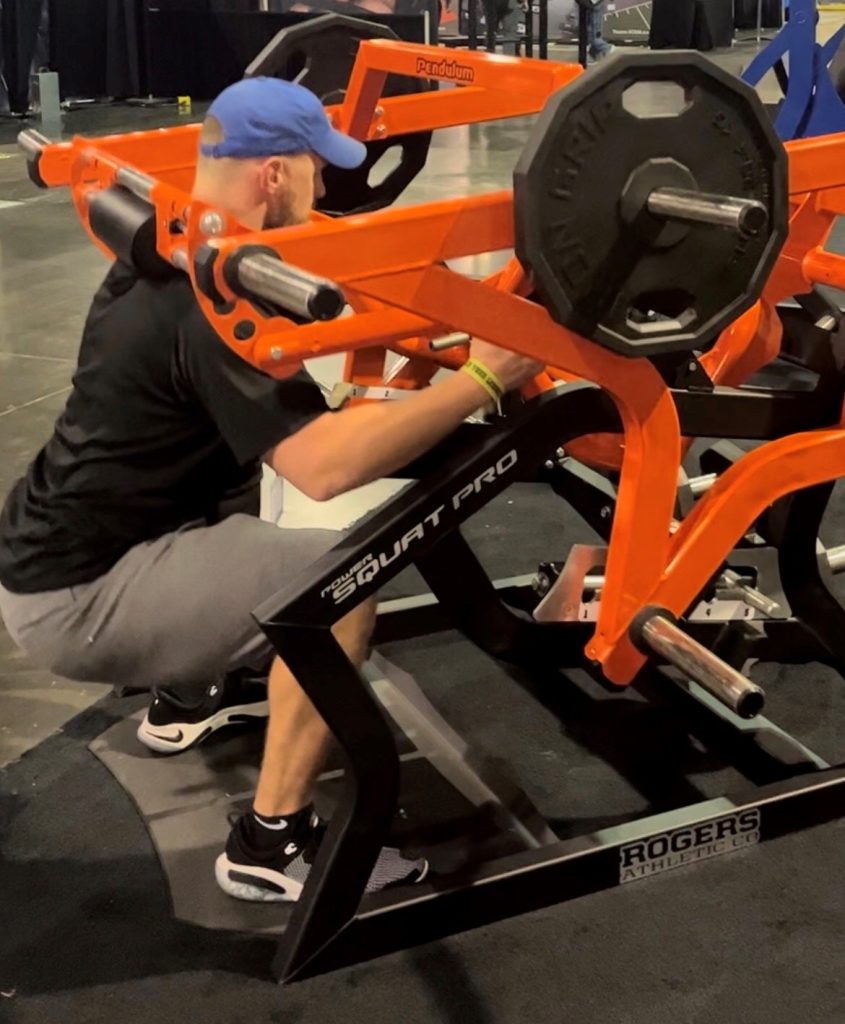
The trapezius muscle is subdivided into three areas: the upper, middle and lower division. The muscle is a stabilizer of the scapula and operates in conjunction with the serratus anterior, which inserts on the medial border of the scapula.
The upper trapezius attaches distally only to the clavicle and when the craniocervical region attachment is held in a rigid manner the upper trapezius elevates the clavicle contributing to craniocervical extension and lateral flexion.
In a study published in the Journal of Orthopedic and Sports Physical Therapy, Surface electromyographic analysis of exercises for the trapezius and serratus anterior muscles – researchers found that, “The unilateral shoulder shrug exercise was found to produce the greatest EMG activity in the upper trapezius.”
To strength train the upper trap effectively the best movement is a single arm weighted shrug. The muscles of the upper cervical region at C2 (the axis vertebrae) arrangements are such that when fatigue occurs and the upper trap is fully contracted, the upper part of the head will tilt towards the shoulder and the chin will tilt away without any instruction.
If the cranial movement does not take place the athlete’s shoulder is not high enough and the trap is not fully contracted. This could be related to coaching, effort, or a weight that is too heavy. Asking the athlete to tilt their head would be a poor exercise training cue, the head tilt occurs naturally when fully elevated. This movement takes place because the upper cervical vertebra pivots on the dens, a toothlike projection on the top of C2, turning the head away from the upraised shoulder.

Pendulum 5-Way Neck Upper Trap Shrug