Psoas Major

The difference between winning and losing is often very narrow. Developing speed and quickness in athletics has always been important and the slightest differences in movement amongst competing athletes often determines the outcome of events.
All muscles play a role in development across sports. When looking at sprinting speed coaches, trainers and athletes all want to know which muscles seemingly have the greatest
influence on speed to help in an athletes’ improvement.
Muscle strength and thus size are considerations in sprinting speed. Researchers have and continue to study lower-body muscle volumes to discover and predict which parts of our anatomy contribute the most to speed of movement. The psoas major is a muscle that is not often discussed by athletic coaches and trainers or pointed to as an anatomically essential area to be targeted.
The psoas is located in the lumbar region of the lower back and connects the spine to the thigh. It is one of the most significant muscles that overlies the vertebral column. The function of the psoas muscle is linking the upper body to the lower body. Along with the iliopsoas muscle, the psoas becomes a major contributor of flexion of the hip joint. In conjunction with other hip flexors the psoas elevates the upper leg towards the body. These proximal hip flexors and extensors have emerged as possibly the most important muscles ‘especially’ the psoas major in determining sprinter speed. Sprinters tend to have a psoas muscle significantly larger than non-sprinters.
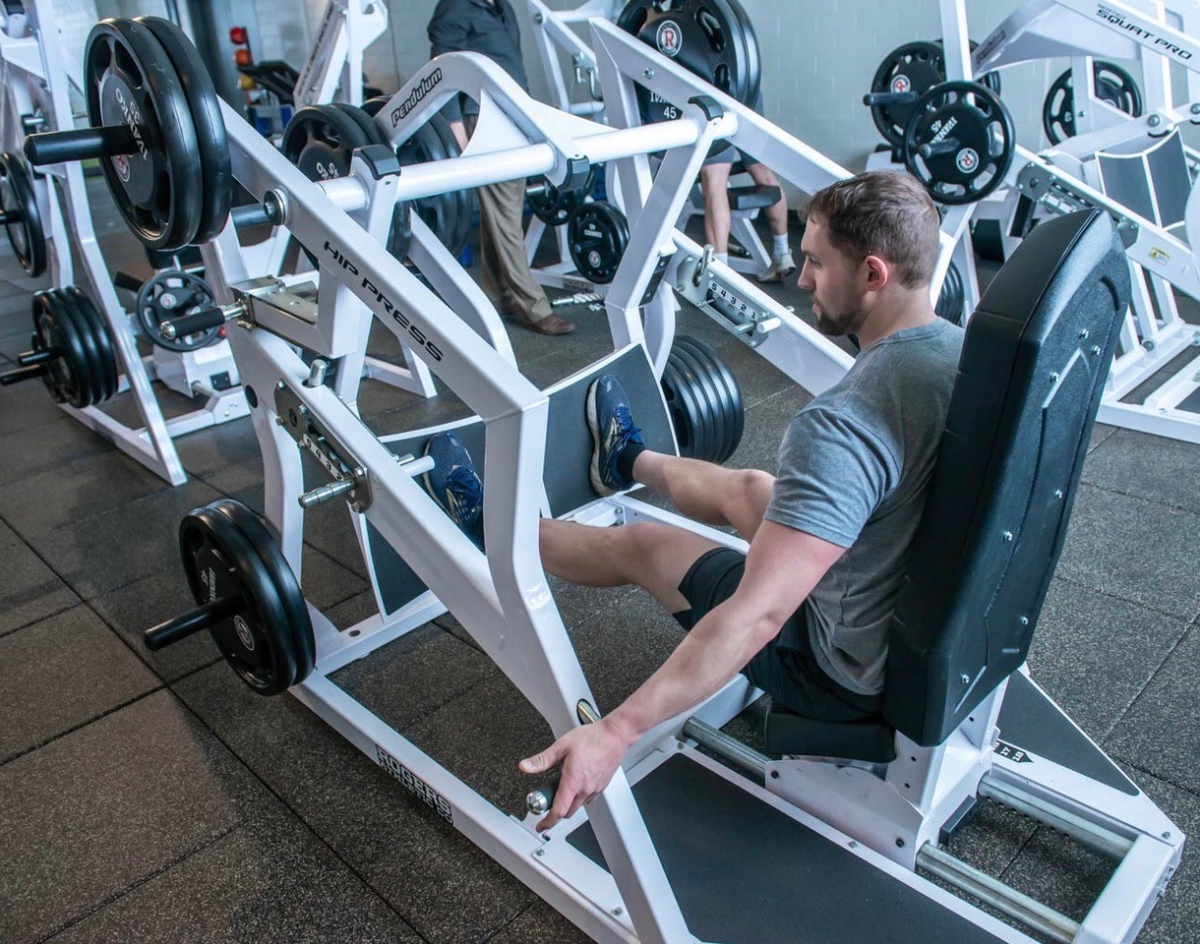
To target this area Rogers Athletic developed the Pendulum Hip Press Pro XT. The Hip Press should be a part of all athletic facilities as no other exercise equipment is designed to augment the psoas. This primary hip flexor is not only vital for running but much of all mobility. Get Strong, increase speed, become more athletic Get Pendulum.


Hip Press Pro XT