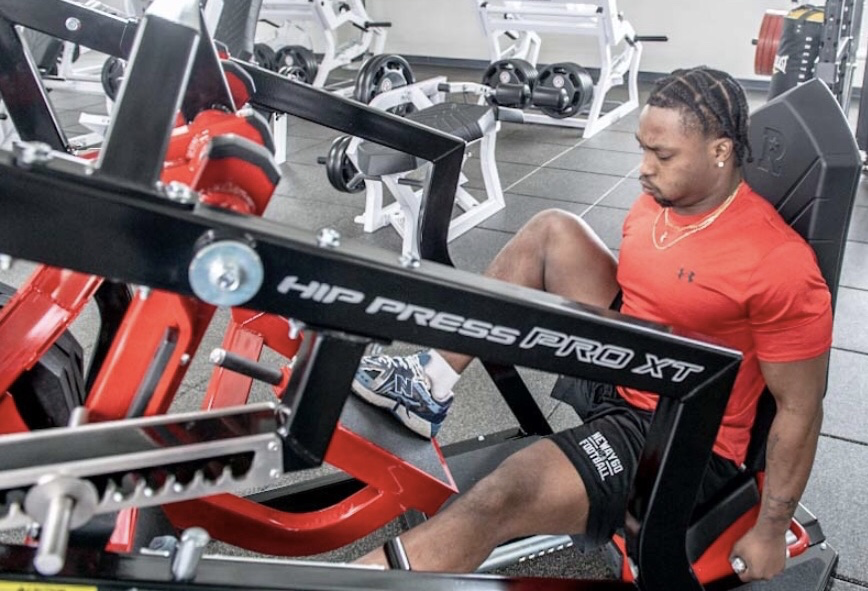
The difference between winning and losing is often very narrow. Developing speed and quickness in athletics has always been important and the slightest differences in movement amongst competing athletes often determines the outcome of events.
All muscles play a role in development across sports. When looking at sprinting speed coaches, trainers and athletes all want to know which muscles seemingly have the greatest
influence on speed to help in an athletes’ improvement.
Muscle strength and thus size are considerations in sprinting speed. Researchers have and continue to study lower-body muscle volumes to discover and predict which parts of our anatomy contribute the most to speed of movement. The psoas major is a muscle that is not often discussed by athletic coaches and trainers or pointed to as an anatomically essential area to be targeted.
The psoas is located in the lumbar region of the lower back and connects the spine to the thigh. It is one of the most significant muscles that overlies the vertebral column. The function of the psoas muscle is linking the upper body to the lower body. Along with the iliopsoas muscle, the psoas becomes a major contributor of flexion of the hip joint. In conjunction with other hip flexors the psoas elevates the upper leg towards the body. These proximal hip flexors and extensors have emerged as possibly the most important muscles ‘especially’ the psoas major in determining sprinter speed. Sprinters tend to have a psoas muscle significantly larger than non-sprinters.
To target this area Rogers Athletic developed the Pendulum Hip Press Pro XT. The Hip Press should be a part of all athletic facilities as no other exercise equipment is designed to augment the psoas. This primary hip flexor is not only vital for running but much of all mobility. Get Strong, increase speed, become more athletic Get Pendulum.
Most of us when we select resistance training it is for varying reasons. For some it is strictly to become stronger or gain muscle mass to change how we look. It may be to improve athleticism or a requirement of your sport. For others they may want to improve mobility or need to engage in rehabilitation or burn additional calories or even join gyms to socialize. The reasons are many. Few are aware of much greater factors and reasoning to make resistance training a choice and most of all a lifetime choice.
In a recent study in the American Journal of Preventive Medicine, Resistance Training and Mortality Risk: A Systematic Review and Meta-Analysis, researchers concluded, “This systematic review and meta-analysis provides the strongest evidence to date that resistance training is associated with reduced risk of all-cause, cardiovascular disease, and cancer-specific mortality.“
This study in no way diminishes the benefits of aerobic fitness or physical fitness routines but adds an additional benefit when
combining them with strength training. Nor does it diminish the importance of following a healthy diet. All are positives but it does say to reduce the risk factors that inhibit a healthy life you should include resistance training throughout it.
Any workout that can be done with a traditional rack can be done with the wall mounted folding rack. A great space saver for your garage, basement, barn and almost any space you see fitting.
If you are a coach or athletic director and need additional space select a wall in either your weight room, training room, field house or other athletic facility. This gives flexibility to your weight training program as you are able to strength train when needed almost anywhere.
Train the posterior chain – from the spinal erectors, gluteal muscles, hamstrings down to the calves and develop the abdominal musculature, as well. All can be done on one great machine designed to Get you Strong.
All adjustments can be made from the workout position through a convenient lever control.
Interchangeable fixed half moon or roller thigh pad options are available and can be easily changed. Choose the pad option that is best for your program.
Equipped with band attachments.
Adjustable roller height. Easily change the resistance of your exercise.
A machine that offers much more than you may expect.
Athletes tend to have lower resting heart rates and greater resting stroke volume due to heart muscle hypertrophy than
non-athletes. Aerobic capacity measured by maximal oxygen uptake (VO2 max) is regarded as the most reliable indicator of cardiorespiratory and overall physical fitness.
Having a significant aerobic capacity is a crucial component of athletic success and affects one’s performance on the field. Obtaining this fitness reduces the metabolic demands of the cardiac muscle related to the activity, which spares the heart from undue exertion and helps increase cardiac output when needed.
Exercise-increased vascularization of the skeletal muscles causes the capillaries to become more dense heightening the
ability to irrigate the muscles with blood. Mitochondria, the main energy supplier, fundamental for the processes of sustaining body activity during exercise and considered the “powerhouses” of muscle cells are increased with activity, generating the ATP required for muscle contraction.
Sport physiologists regard VO2 max as one of the most reliable indicators of an athlete‘s overall physical fitness. Of course age, gender, genetics, prior training, body composition, physical state, testing procedure and more all affect results of the measurement.
Conditioning programs can effectively optimize aerobic fitness and sport-specific performance. Measurement of aerobic capacity can be thought of as twofold: not only does the athlete get a view of where his or her fitness is relative to themselves but the coach has an opportunity to evaluate their own program related to individual progress.
Maximum oxygen uptake can be measured numerous ways.
The most accurate is a graded exercise test using indirect
calorimetry wearing a mask, which records oxygen consumption and carbon dioxide production. This can be done on a treadmill or stationary bike. There is also the Cooper 12-minute run/walk test, multistage shuttle run (beep test), wearable fitness devices and other products that companies put forth.
The key to measurement and most importantly is consultation with your medical staff and athletic trainers before administering testing. Then using the results in a positive manner to provide information to the athlete and evaluate one’s own fitness program. A great way to Get fit and Strong.
As coaches, teachers and parents we all know that cellular phone dependence can result in behavioral and social challenges of everyday living. Excessive use of devices is
characterized by more than 4 hours of mobile phone activity per day.
Athletes align with greater predicaments as they have interactions, not only with classmates, teachers, academic programs, teammates, coaches, family, but invest a great deal of time in the rigorous demands of their sports be it in training for practice or competition.
Sports require not only physical abilities but psychological involvement which adds additional stresses. Competition, being coached, preparation, performance, injuries and much more add to one’s day-to-day feelings and behaviors.
Rest is imperative whether it be napping or bedtime. What is important is that sleep repairs muscle, energy stores and combines many of our short term memories into single unified stable and often lasting thoughts. Conversely sleep deprivation
can lead to higher error rates, motor performance decline, cognitive and emotional deficits. Skeletal muscle glycogen is an important energy source for muscle contraction. Poor sleep can reduce replenishment and reduce endurance the following day.
Needing to always check and use a mobile phone especially before bedtime is problematic behavior. The emission of blue light from the screen delays the release of melatonin, a natural hormone released by one’s brain in response to darkness signaling to your body it is time for sleep. Consistently utilizing a phone in this manner shortens the amount of sleep you will get and the quality.
The following are a few of the many reminders to continually instruct athletes with, and are important constructs of building a winning program and living a healthy productive life.
Limit cell phone use especially in the evening.
Blue light from your phone interferes with sleep
Insufficient sleep for an athlete is less than 7-8 hours
Sleep is an important fuel your muscles need for performance
Poor sleeping behavior can impair muscular strength, speed, and increase the risk of injury
Sleep is important component of reaction time
Sleep fights off mental fatigue, the feeling of training is harder than it actually is
Sleep is important to improve ‘precovery’, that is, when there is a stressful physical event it will help optimize the body’s readiness and accelerate post-event recovery
Sleep is critical for maintaining optimal cognitive function
Sleep is composed of a series of complex neurophysiological states that play important roles in learning, memory and cognitive processing
Quality sleep is important in academic success
Sleep is important in adapting to travel
Adequate sleep is important for social, behavioral and dealing with the problems of everyday living
Lat Pull Pro a Machine You Will Never Get Tired Of
Mike Gittleson was the Director of Strength & Conditioning at the University of Michigan for 30 years and was a part of 15 Football Championships in that time. He explains the definition of manual is: “of relating to or involving the hands”, “worked or done by hand and not by machine.” – and with Manual all you need to do is add a little Resistance.
Dan Riley (a former strength and conditioning coach) and I grew up in Manchester N.H., in the 60’s and 70’s. We both attended Manchester Central High. Weight training at the time was often avoided by the fear that many thought it would interfere with one’s movement, flexibility and athleticism. The majority of women feared lifting weights as they thought they would become ‘muscle bound’ a condition which would make them look and become bulky. But as we grew science began to evolve. The literature was confirming that not only developing stronger muscles improves one’s physique, but positively affects fitness, strength, speed and abilities in sport.
When we started training there were no gyms to choose from in town dedicated to strength training. Golds Gym opened 3,000 miles away in Venice beach California in 1965, Powerhouse Gym in 1974, Planet Fitness, Lifetime Fitness not until the 1990s, Anytime Fitness not until 2002. We found a place to lift weights at the local Y.M.C.A. The Y.M.C.A had housing, libraries, reading rooms, a pool, basketball and volleyball courts, wrestling mats, heavy bags and more. There was also a small area for weight training that had a squat rack, a flat back bench, a plate loaded combined leg curl and leg extension, which was totally flat, a glute/ham and a small dumbbell rack. It was the best and only set up in a city of 100,000. The good news: it was never crowded. The equipment was plenty, Dan, his brother and I and a few of our friends trained there.
After High School Dan and I went our separate ways, I was drafted and went off to Vietnam, Dan to College. After the service I attended several Universities and finished my Masters at Michigan. There I began teaching Exercise Physiology with no intention of coaching yet, I unintentionally became the first strength and conditioning coach in the Big Ten.
Riley and I had not stayed in touch and unbeknownst to me having never in our lives discussed wanting to coach anything at all, he became the first strength and conditioning coach on the east coast. After college he started his career at West Point then moved to Penn State and from there the Washington Redskins and Houston Texans. He had a stellar career being part of three Super Bowls and four NFC championships.
When the first National Strength and Conditioning Association convention was held there were maybe 70 people, some being from equipment companies. In 1979 the second NSCA convention was held in Lincoln, Nebraska. The number of coaches were more than in 1978 but only a small fraction of the number of attendees that occur today and many of them in 1979 were not full time employees.
I needed to be present at the event, the profession was in its infancy and I wanted to find out how others were approaching fitness. I was totally surprised as one of the speakers was none other than Dan Riley, at that time he was the Head Strength Coach at Penn State. I was unaware he was a coach and was also at a major university, shocking for me and a pleasant surprise. Dan’s speech was not only great but was probably the most beneficial speech given in the area of strength and conditioning. He explained how he trained his athletes and most importantly introduced the Nation to the training method called Manual Resistance.
The timing was near perfect as weight training facilities in the 70s had limited square footage and even less equipment. Our room was 2,000 square feet with over 600 athletes on campus. The strength training method of Manual Resistance gave opportunities to train large numbers of athletes performing strengthening movements in which devices were unavailable, especially for exercises, such as neck training. Not only could a coach train large numbers of athletes, but they could include aggressive ‘finishing movements’ to any exercise which they thought necessary.
When I got back to Michigan from the NSCA I wanted to make sure that high school coaches knew how to train ‘Manually’ as there were very few in attendance at the conference. The more student athletes that had access to a variety of strengthening methods the better sports would become. So, motivated I wrote the following rules for Manual Resistance and then mailed them to over a thousand high schools:
Important Manual Resistance Considerations:
When training manually all athletes must understand the rules of performing each repetition properly.
The athlete should not only be capable of performing an exercise but have the ability to teach, as well as administer the exercise to others.
Once an athlete understands how to execute manual resistance it demands the same effort and motivation as if trying to improve on a bench, squat, clean or any other strength training exercise.
When training manually to progressively overload it requires a strength measurement to track progress. Taking a circumference, body composition and other physiological variables allows the coach and athlete to monitor results.
Remember when training the head and neck manually athletes should have clean hands especially during flu season.
The rules of Manual Resistance must be reviewed regularly!
The Rules of Manual Resistance
1). If you use Manual Resistance make sure you and your spotter know and understand the rules.
2). The Lifter begins each exercise with the goal of 6-8 reps. This requires pacing, in other words, the first repetition is not an all out effort. The effort must be increasing for every subsequent repetition.
2a). The Spotter should allow the lifter to perform each repetition at the same pace or speed of movement. This will require different amounts of pressure by the spotter during the rep (because of leverage). The lifter will feel as though the resistance is similar at all joint angles (the resistance will feel smooth).
3). The lowering phase of every repetition should be slower than the raising phase. A guide in learning manual resistance is to raise the involved limbs up in 1-2 seconds or at a 1-2 count and lower them in 4-5 seconds or at a 4 or 5 count.
3a). The Spotter must make sure that they feel more force by the lifter during the lowering phase of each repetition.
4). The Lifter should continually contract their target musculature during the raising phase and the lowering phase of every repetition.
4a). The Spotter must give feedback to the lifter to ensure there is always a constant contraction on every repetition performed. The spotter should identify any relaxation or loss of force by the lifter during the movement.
5). The Lifter should pause with pressure against the spotter’s resistance at the top of every movement. Pausing with pressure and no relaxation is extremely difficult.
5a). The Spotter should insure the lifter is applying force at the top of the movement. The spotter must feel if the lifter is relaxing. The spotter must ease slowly into the lowering phase of the exercise. Slowly easing into the lowering phase or descent is extremely important.
6). The exercise is completed when the athlete reaches momentary muscular failure.
What is interesting is Riley and I growing up and going to the same high school, working out in the same facility and then being selected to coach at major universities could at least be considered surprising. Yet, years later Ryan Day the head football coach of Ohio State, Chip Kelly former head coach of the 49ers, Philadelphia Eagles and Oregon Ducks went to Manchester Central High. Dan Mullen, former head coach of the Florida Gators and Mississippi State Bulldogs was also from Manchester. He played football and went to high school .8 of a mile from Central High. At the time there were roughly 600,000 people in the entire State of New Hampshire making it an interesting part of history for how and why these coaches evolved to such a high level in athletics from this area.
The barbell squat is a popular, seemingly simple, yet complex structural activity. The barbell squat affects the movement of each joint by the inhibition of another joint as one descends and ascends. Skeletal proportions between individuals vary significantly, as there are genetic, sexual, and age-related factors that all enter into the movement.
In performing the exercise there is knee and hip flexion, internal and external rotation of the hip joint, trunk rotation and tilt, pelvic tilt and more. Based on one’s anatomy each lifter may require different cues, as well as bar placement to get the most out of the movement.
Some coaching points used all based on one’s anatomical considerations:
1. More upright position the more knee flexion is achieved which reduces hip flexion
2. Greater forward trunk inclination decreases knee flexion, and adds more stress and muscular demand of the back musculature
3. Squatting with the tibia more upright decreases knee flexion
4. Increasing tibia range of motion by moving it forward increases knee flexion
5. Rotating the foot out about 30 -50 degrees tends to increase hip adductor activity
6. A medium to wide stance in squatting that is shoulder width or standing with foot placement outside the shoulders tends to have more gluteus maximus activity
7. Deep squats, as well as partial have more gluteus maximus activity
8. The bar is placed high on the shoulders it allows for an upright torso but requires more knee flexion and more quadricep activity
9. The low bar squat across the posterior deltoid region is more hip dominant and requires more back musculature activity
10. Hand position during a high bar squat is narrower than a wider grip for low bar squatting.
Having someone knowledgeable to initially, and periodically instruct you with form squatting using a barbell aids dramatically in overall development. Knowing the anatomical complexity of the exercise Rogers Athletic developed the Pendulum Squat Pro to allow the lifter to do the best squatting motion based on each individual body’s structural features. With its ‘patented’ floating yoke that rests upon the athlete’s shoulders the machine’s weight is always on the musculature corresponding to an individual’s joint interactions, something that is difficult to obtain throughout an entire repetition range with a barbell regardless of coaching.
The Pendulum Squat Pro is a must for every facility.