Based on the current literature resistance training appears to have positive effects on cognition. Resistance training programs in general focus on improving these two factors, muscle hypertrophy and improving muscular strength. Yet seldom do we think of strength training as an intervention to induce functional brain changes. Reviewing the literature there is strong evidence that there is a relationship between cognition and measures of muscular strength and muscle mass. Training over time is beneficial to the neurobiological processes leading to lower white matter atrophy, lower volumes of white matter lesions and increased grey matter volume in specific areas.
The difference between winning and losing is often very narrow. Developing speed and quickness in athletics has always been important and the slightest differences in movement amongst competing athletes often determines the outcome of events.
All muscles play a role in development across sports. When looking at sprinting speed coaches, trainers and athletes all want to know which muscles seemingly have the greatest
influence on speed to help in an athletes’ improvement.
Muscle strength and thus size are considerations in sprinting speed. Researchers have and continue to study lower-body muscle volumes to discover and predict which parts of our anatomy contribute the most to speed of movement. The psoas major is a muscle that is not often discussed by athletic coaches and trainers or pointed to as an anatomically essential area to be targeted.
The psoas is located in the lumbar region of the lower back and connects the spine to the thigh. It is one of the most significant muscles that overlies the vertebral column. The function of the psoas muscle is linking the upper body to the lower body. Along with the iliopsoas muscle, the psoas becomes a major contributor of flexion of the hip joint. In conjunction with other hip flexors the psoas elevates the upper leg towards the body. These proximal hip flexors and extensors have emerged as possibly the most important muscles ‘especially’ the psoas major in determining sprinter speed. Sprinters tend to have a psoas muscle significantly larger than non-sprinters.
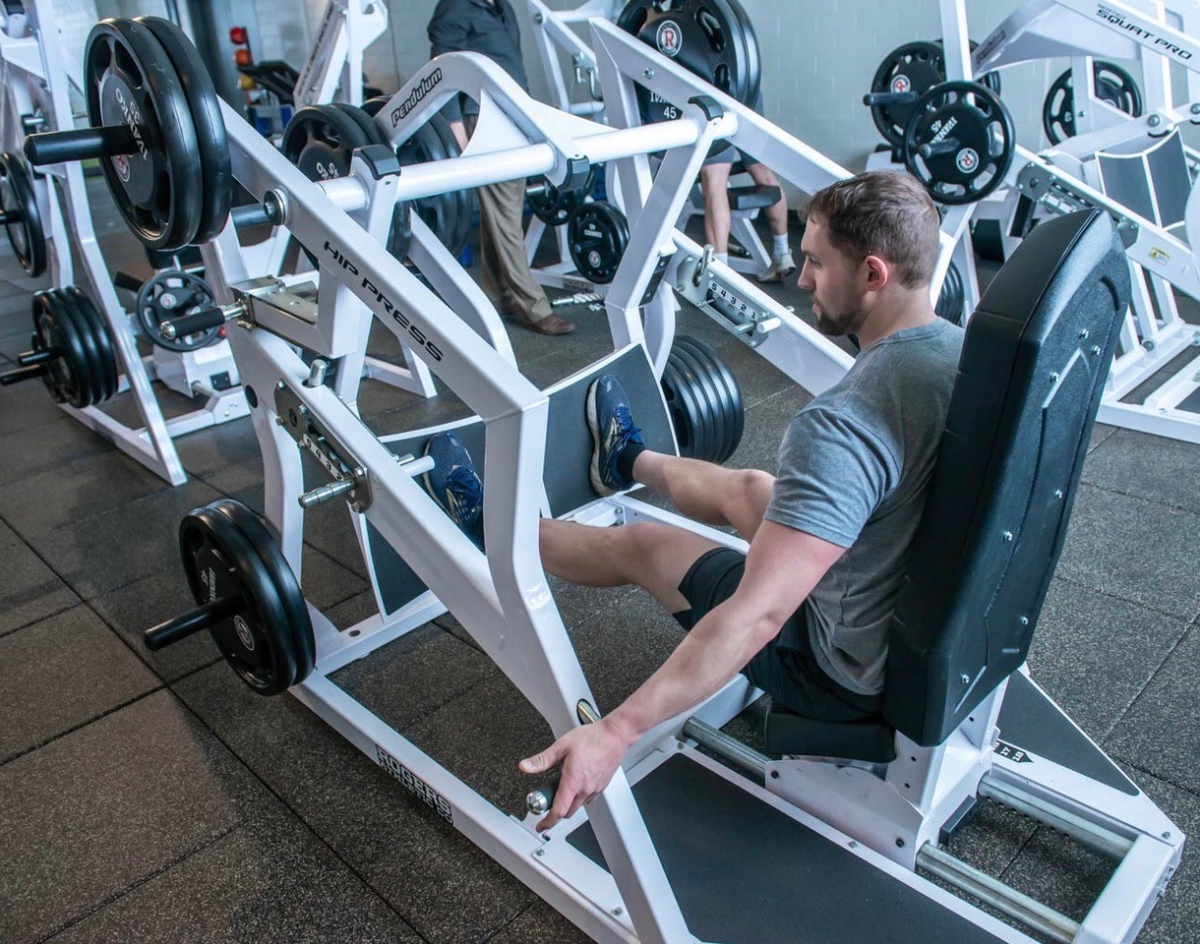
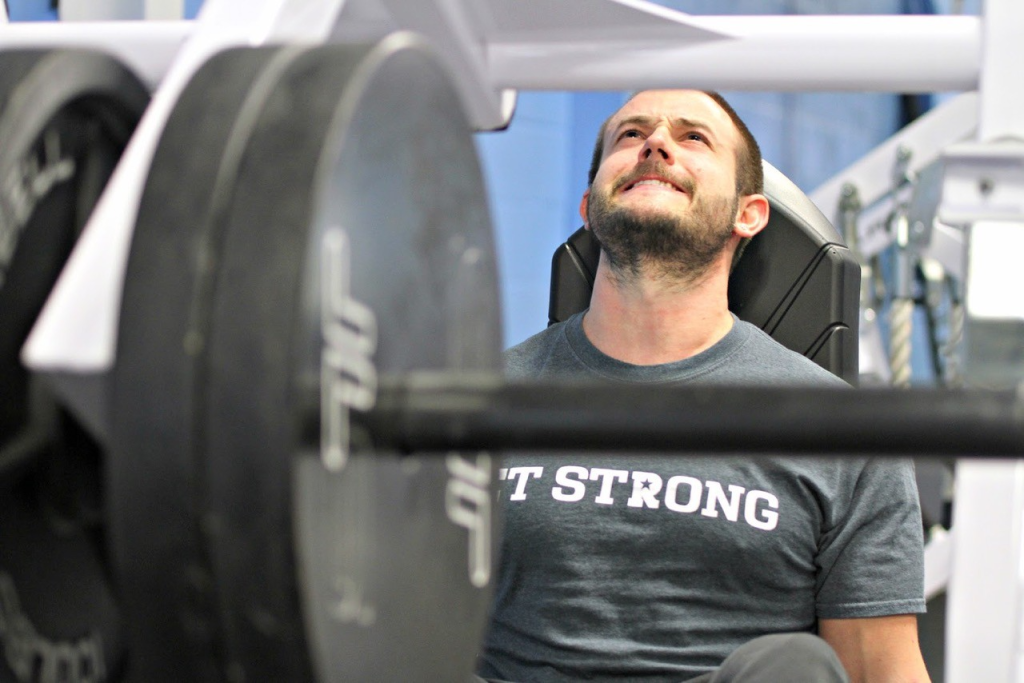
To target this area Rogers Athletic developed the Pendulum Hip Press Pro XT. The Hip Press should be a part of all athletic facilities as no other exercise equipment is designed to augment the psoas. This primary hip flexor is not only vital for running but much of all mobility. Get Strong, increase speed, become more athletic Get Pendulum.
The hips and their strength have an effect on balance, mobility and performance across all ages. Since torque power and velocity reduction is part of the aging process, as we become older, slowing its reduction is an important consideration, which affects our overall movement capabilities and function. This in turn emphasizes the importance of a continuation of training throughout one’s lifetime.
Most of our musculature is paired, that is, they occur on both sides of our structure. When we exercise we move and strengthen them unilaterally, on one side the body, or bilaterally, both sides. Proper muscular balance is important for flexibility, stability, strength, athleticism and aging. Muscle imbalances can lead to weakness, muscular tightness, pain, movement impairments due to arthrokinematics (how your joints move), which all can lead to decreased performance, instability, increased injury risk and chronic pain.
When strength training we are able to select unilateral or bilateral movements in our weightlifting regimes. If a trainee finds one limb is stronger than the other, unilateral exercises can be chosen to compare and rebuild the strength of the affected limb, a very typical exercise technique. Many exercise machines are designed to augment this.
A Hip Press Designed for Bilateral or Unilateral Training
Coaches, trainers and physicians often recommend what is deemed ‘cross education’, in which strength training the unaffected limb initiates a neurological response that causes enhanced growth of an under trained contralateral limb. An example is having a casted immobilized leg and training the healthy limb while it heals. Cross education can preserve much of the strength and size as the immobilized leg heals which expedites ‘return to play’.
Get your hips equally strong and keep them strong utilizing a unilateral and bilateral training plan that fits your needs and objectives
When studying the biomechanics of sprinting you will find statements such as the following about the use of starting blocks and the development of speed – “Greater average force production during the push against the blocks, especially from the rear leg and particularly the hip appears to be important for performance.” There are many other similar quotes with corresponding research that show that hip power off of the starting blocks allows for more time to generate propulsive force in running performance.
It is just not the start in sprinting, strong hips and it’s joints generate the majority of the power in most athletic movements and are a crucial source for the connection of upper and lower body muscle groups. Throwing, kicking, jumping and running all benefit from well developed hip musculature.
The Hip Press is not a typical leg pressing movement. It has a unique strength curve and a custom seat design that allows for contraction of the muscular anatomy of the hip and gluteal region. This is aided by an adjustable stopper which controls the depth of movement.
The primary hip extensor muscles are the gluteus maximus and hamstrings. The primary flexors are the iliopsoas, sartorius and rectus femoris. These groups are targeted and trained on the Pendulum Hip Press.
Peripatellar references the area around the knee joint. Patellofemoral pain refers to aching pain and/or inflammation in this area. In athletics, physically active individuals, the military and with runners it is one of the most common musculoskeletal overuse injuries. The condition is exacerbated by the numerous associated movements such as jumping, climbing, conditioning and other activities that are required to excel.
One of the important areas in preparation for sport is the inclusion of hip training to help offset peripatellar issues.
Journal of Orthopaedic & Sports Physical Therapy
Hip and Knee Strengthening Is More Effective Than Knee Strengthening Alone for Reducing Pain and Improving Activity in Individuals With Patellofemoral Pain: A Systematic Review With Meta-analysis
Journal of Athletic Training
Strengthening of the Hip and Core Versus Knee Muscles for the Treatment of Patellofemoral Pain: A Multicenter Randomized Controlled Trial
Brazilian Journal of Physics
Effectiveness of hip muscle strengthening in patellofemoral pain syndrome patients: a systematic review
British Journal of Sports Medicine
Does adding hip exercises to quadriceps exercises result in superior outcomes in pain, function and quality of life for people with knee osteoarthritis? A systematic review and meta-analysis
Journal of Orthopedics,Trauma and Rehabilitation
Altered Hip Mechanics and Patellofemoral Pain. A Review of Literature
These studies are not to define the type of training one should select but only to reinforce that incorporating hip, core and knee development will reduce the chances of acquiring patellofemoral problems in athletics.